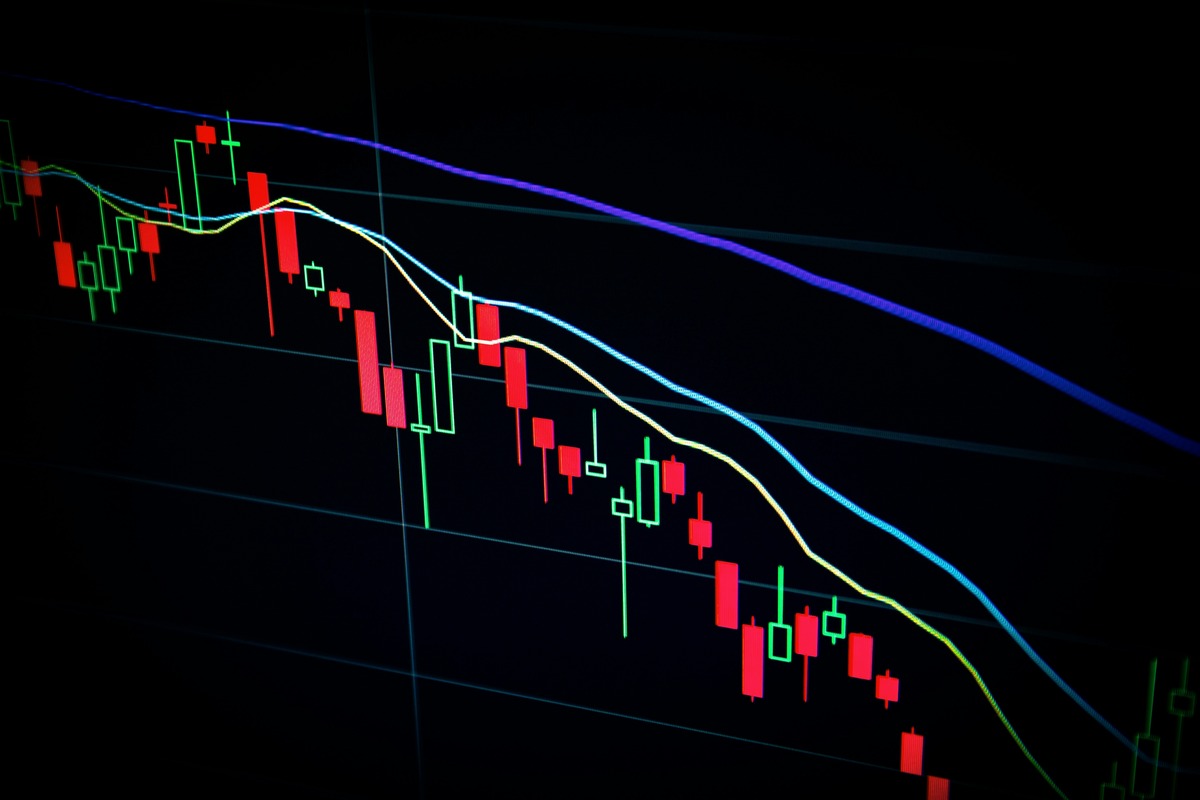
Tech-driven volatility gripped Wall Street as geopolitical tensions, rising inflation, and Federal Reserve rate hike fears sparked a rotation out of growth stocks, hammering the Nasdaq while broader indices held relatively steady.
Volatility remained the dominant theme as the sell-off on Wall Street resumed with greater intensity, driven by a rotation out of growth stocks, particularly technology names. The CBOE Volatility Index, aka VIX, spiked to 23.34, the highest since April 7, and was up more than 8% at 20.41 at last check.
Source: TradingView
Multiple headwinds are at play, dampening risk appetite and weighing on several high-profile technology stocks that had powered the market's record rally earlier this year.
- Geopolitical tensions show no signs of abating, with headline-driven swings fueling the kind of extreme market volatility witnessed since Friday.
- The economic signals suggest that growth remains resilient and inflationary pressures are building. However, both policymakers and market participants appear to view the recent price surge as largely transitory, betting that inflation will moderate once the U.S.-Iran conflict is resolved and energy-related supply shocks fade.
- With the economy continuing to show resilience,the Federal Reserve is left with limited room to ease policy and may be compelled to maintain a higher-for-longer stance—or, if inflationary pressures persist, contemplate further rate increases. Following the May non-farm payrolls report, futures traders have begun factoring in a 67.8% probability of a rate hike.
All Is Not Quiet on the Middle East Front
The week started with an escalation as Israel struck Iranian energy infrastructure, and subsequently the two sides exchanged fire, in the first major violation following the April ceasefire. While U.S. President Donald Trump emphatically called for a ceasefire, with reports even suggesting a rift with ally and Israeli counterpart Benjamin Netanyahu, the two Middle East states later stopped the skirmish. Trump then went on to suggest that “Final negotiations on ‘Peace’ are proceeding” and that “Things should move quickly,” raising hopes for a near-term resolution.
However, things took a turn for the worse as Trump alleged that Iran shot down one of America’s Apache helicopters that were patrolling the Strait of Hormuz and threatened retaliation.
Why Crude Oil Dropped Despite Rising Tensions
Despite the aggravation seen on the geopolitical front and the dollar turning mixed, the West Texas Intermediate (WTI) crude futures plunged nearly 4.5% and ICE-traded Brent futures slid more than 3.5%.
The Nasdaq 100 Index (NDX), which plunged to an intraday low of 28,196.90, down more than 4% from the previous close, has recouped part of the losses and is yet trading down more than 2%. The Nasdaq 100 (NQ) futures contract tied to the index was also down more than 2%. Meanwhile, the Nasdaq Composite, indicating the broader tech complex, including financial stocks, fell a more modest 1.60%, and the blue-chip Dow Jones Industrial average (DJI), which is fairly insulated due to its relatively lower tech exposure, was only marginally lower.
The broader S&P 500 Index and the ES contract tied to the index fell about 1%, respectively.
Analysts See Short-lived Correction, Broadening Returns
Fund manager Louis Navellier, however, chose to look at the brighter side of things. While noting that volatility continued amid the ongoing profit taking in tech names, sectors that underperformed over the last month were staging a comeback, he said. “Returns are broadening, which is a good thing.”
Navellier attributed the volatility in tech in part to the concentration of returns, with the top 20% hugely outperforming the bottom 20%. He noted that in the last three months, the top 20% returned 110%, while the bottom 20% had a negative 10% return.
In exclusive comments to Marketframework, Lloyd Financial Chief Investment Officer Colin Symons explained the volatile ride. “We saw a huge chase in the market, with spot-up, vol-up dynamics indicating investors chasing returns through aggressive call buying: That's a recipe for a potential move down as a resolution,” the strategist said. He also remarked that the S&P 500 blew through the 7,400 level, which he previously thought would be a solid support.
Symons also weighed in on the crude sell-off. He speculated that a peace deal could be close. “That said, the way the market works these days, it's easy to imagine some knew about it beforehand, creating the selloff before the news was 'official,’” he added. That said, Colin expects the correction to be short-lived, persisting only until short-term speculators are washed out.