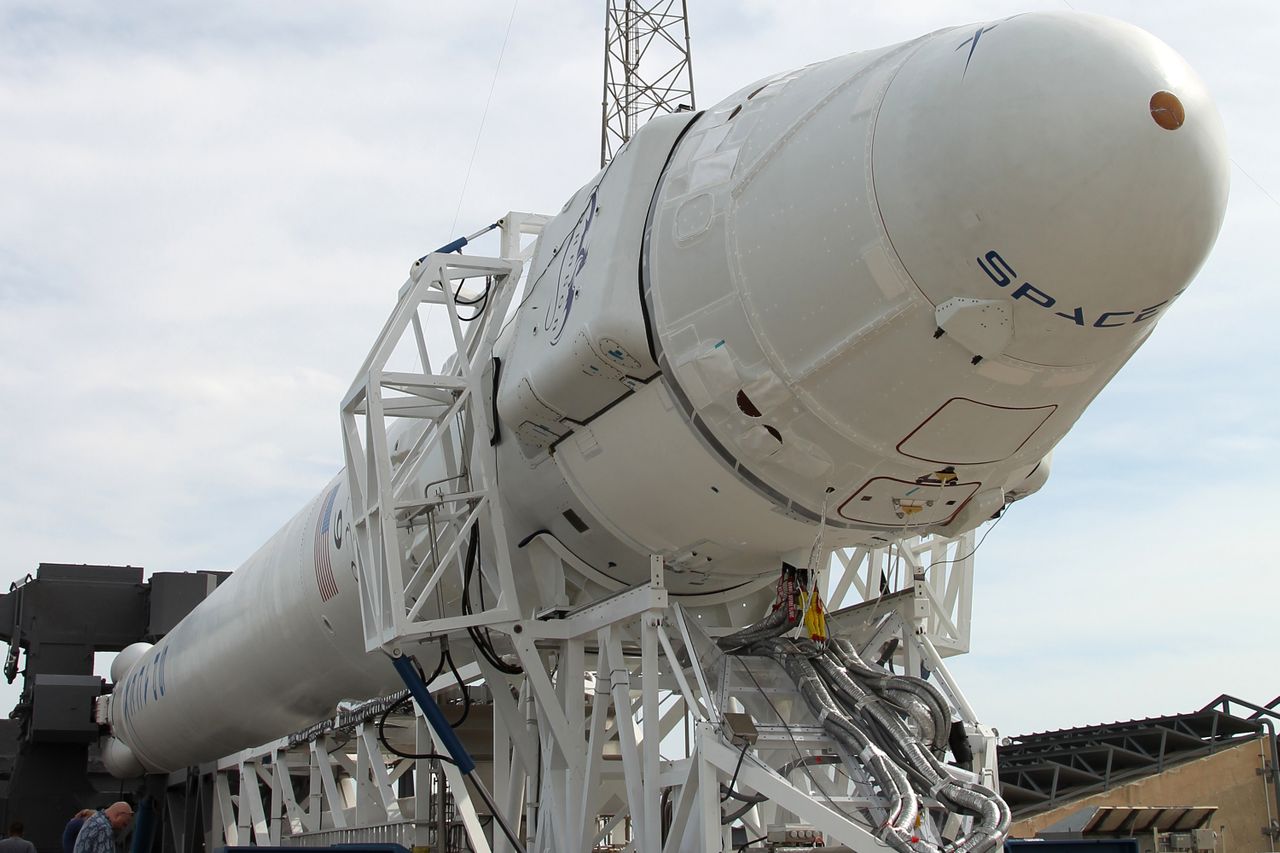
SpaceX (SPCX) stock faces volatility after its record-breaking IPO. With a major Nasdaq-100 inclusion event expected around July 6–7, markets brace for a $22 billion shift impacting tech and chip stocks.
SpaceX shares (NASDAQ: SPCX) are giving back ground today, trading near $178.82 after falling another 6.7% on the day. The pullback extends a stretch that's seen the stock tumble roughly 23% from Monday's $225.64 peak.
Trendline support has held with the RSI sitting between neutral and bullish levels, though a former Nasdaq CEO has publicly warned that SPCX is trading on sentiment rather than fundamentals.
The bigger story is how far the stock has traveled since its June 12 debut. SpaceX priced its IPO at $135, opened at $150, and closed its first session up 19.2% at $160.95. The offering raised a record-breaking $75 billion, the largest IPO in history valuing the company at roughly $2.1 trillion at the close.
From there, momentum carried shares as much as 67% above issuance before this week's reversal trimmed gains.. Analysts attribute the wild swings to SpaceX's float-constrained structure, only about 4% of shares are freely tradable meaning price action is being driven more by scarcity and momentum than by earnings or revenue.
Nasdaq's Rule Change Is the Real Catalyst Ahead
The next major move for SPCX may not come from sentiment at all, but from mechanics and Nasdaq itself sits at the center of it.
SpaceX listed at a $1.77 trillion valuation, large enough to qualify under a new "fast-entry" rule the exchange introduced just six weeks before the IPO, written specifically to accommodate listings of this size. Under the rule, a newly listed company ranking among the top 40 Nasdaq-100 constituents by market cap is evaluated on day seven, the inclusion is announced on day ten, and the stock is mechanically added to the index on day fifteen.
For SpaceX, that lands the addition around July 6-7, a known, dated catalyst that's rare in markets.
This isn't a discretionary call. Once Nasdaq confirms inclusion, QQQ and every other Nasdaq-100-tracking fund must buy SPCX by rule, regardless of valuation or timing.
Estimates of that flow are large and converge across desks: SpotGamma puts combined forced buying from Nasdaq-100 and Russell trackers at $22-27 billion, against a Nasdaq-100 tracking universe exceeding $1.4 trillion (QQQ alone runs roughly $500 billion).
Bloomberg Intelligence estimates, cited by CME Group, suggest Russell 1000 and Nasdaq-100 funds combined would need to absorb 24% of SpaceX's public float, climbing past 50% once actively managed index-benchmarked funds are included.
SpaceX's resulting index weight is itself a live debate: standard methodology implies 0.47-0.70%, but Nasdaq's new float-multiplier rule, designed to boost weighting for low-float mega-IPOs, could push that as high as 2.6% under Morningstar's modeling.
Why Semis Are in the Blast Radius
Index funds don't print new cash for this. The capital comes from proportional trimming across every other Nasdaq-100 name, concentrated in the Market-On-Close auction on rebalance day, and CME Group flags forced selling in Apple, Microsoft, and Nvidia arriving in that same narrow window.
The timing is delicate: Nvidia, Broadcom, Micron, AMD, and Intel already sold off sharply this week on profit-taking, with single-session moves of 2-8%. A second, valuation-blind wave of mechanical selling in three weeks compounds rather than offsets that technical fragility.
Market Outlook: SPCX
Expect continued choppy, two-way price action for SPCX in the near term. Strategists believe this high-volatility environment will stick around until we hit either the December 2026 lockup expiration or SpaceX’s maiden earnings release as a public company, slated for September 2.
SPCX M5 Chart, June 18, 2026
Source: TradingView
Key Technical Levels:
Support (The Floor): $171, 162, $150
Resistance (The Ceiling): $183, $193, $212
Major Catalysts & Market Drivers
S&P 500 Delay: In a bit of regulatory relief, S&P Global rejected a fast-track entry for the stock on June 4. This pushes a massive capital inflow event—estimated to absorb 19% of the float—out to 2027 at the earliest, giving the market some breathing room.
The Next Big Date: Mark July 6–7 on your calendar. This window stands as the next major catalyst, packing a heavy punch for both SPCX and the semiconductor names on the opposing side of the trade.