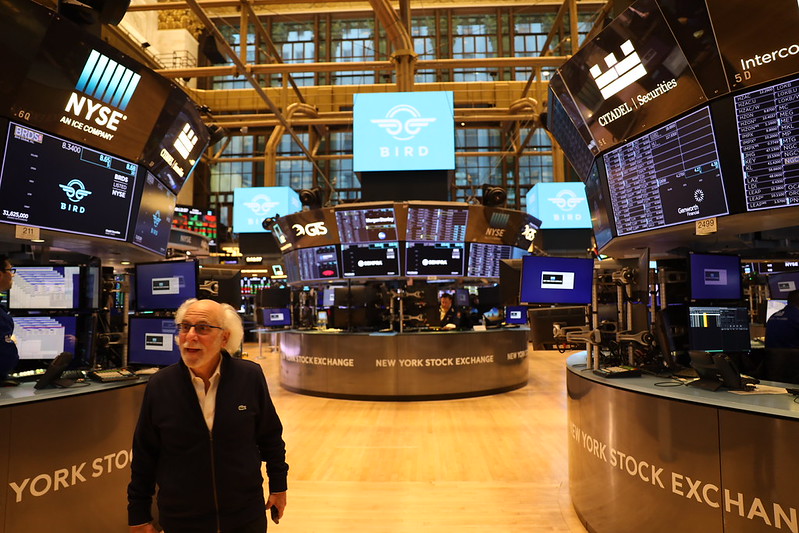
The Fed's rate hold is priced in; What moves NQ is Warsh's tone on future hikes, the dot plot's easing bias removal, and Thursday's expiry amplifying whatever follows.
The Nasdaq 100 futures contract (NQ) advanced about half a percentage points, ahead of Wednesday’s session, which features the all-important Federal Reserve’s rate decision. The rebound follows a 1.15% decline in the cash index on Tuesday, which pushed the Nasdaq 100 (NDX) back below the key 30,000 level.
Some of the upside stems from the relief over the peace deal announced by the U.S.-Iran on Sunday, which is scheduled to be officially signed on Friday. The deal provides a 60-day ceasefire window for the two sides to negotiate a final framework agreement to end the war.
Whether the early optimism can extend through the session will likely depend less on the rate decision itself and more on the message delivered by new Fed Chair Kevin Warsh at his first policy meeting. While policymakers are widely expected to leave rates unchanged, investors will closely scrutinize Warsh’s tone for clues on the future policy path and the likelihood of any rate hikes later this year.
What Futures Market Discounts
Source: CME FedWatch Tool
Warsh takes over the helm at a time when the annual core consumer price inflation (CPI) remains elevated at 2.8% and the headline rate at 4.2%, The upside thrust to inflation came primarily from higher energy product prices, which jumped 23.5% in the May inflation print. The food inflation also stayed elevated at 3.1%. Against the backdrop, analysts think the central bank is unjustified in keeping the easing bias in the post-meeting policy statement, which will be released at 2 p.m. ET.
Fund manager Louis Navellier expects a hawkish Warsh to trigger volatility in the market. On the contrary, a more dovish tone than expected from the incoming central bank head will prove bullish for equities, he said. So the key question is which version of Warsh will turn up on Wednesday.
Morgan Stanley Chief U.S. Economist Michael Gapen expects the Fed to remove its easing bias. In the Summary of Economic Projections (SEP), the economist expects a significant upward revision to the 2026 inflation forecast. Gapen sees the median dot-plot to suggest no change in the policy rate in 2026 but a 50 basis-point cut by 2028. He, however, sees two to three dots, projecting 50 bps to 75 bps tightening, beginning later this year.
The Morgan Stanley economist expects Warsh to strike a middle ground: “Warsh will downplay the modal projections given heightened uncertainty, acknowledge the
risk of persistent inflationary pressures from higher energy prices, and speak optimistically about AI-related capex as boosting productivity (and reducing inflationary pressures) over the medium-term.”
What Morgan Stanley Expects the Fed to Change in Wednesday's Statement
Three subtle but deliberate edits to the policy language are on the table:
- Upgrading the jobs assessment: "Remained low, on average" becomes "have picked up in recent months" — a straightforward acknowledgment that the labor market has strengthened, removing a downbeat qualifier that no longer reflects the data.
- Quietly dropping the unemployment timeframe: The phrase "in recent months" gets removed from the description of the unemployment rate remaining little changed. A small edit, but it signals the Fed wants to describe conditions as structural rather than temporary.
- Removing the easing bias, which is considered the most important tweak: The current statement reads:
- "In considering the extent and timing of additional adjustments to the target range..."
- The new version would read:
- "In considering any adjustments to the target range..."
The “extent and timing of additional adjustments” was introduced in 2024 when the Fed was beginning to cut rates. For 18 months, the market priced it in a way, embedding rate-cut expectations into valuations. With the removal of easing bias, the Fed is quietly closing the door on the rate-cut trade without completely ruling it out. For NQ, it means the "lower rates lift tech valuations" thesis that has underpinned much of the Nasdaq's 39% one-year gain will lose its policy anchor.
What Possible Fed Outcomes Mean for NQ
Base Case: A conditional pause, i.e. the Fed acknowledges the sticky inflation but keeps a future easing on the table, would help the NQ stabilize around the 30K level.
Bull Case: A dovish surprise could push NQ toward 30,800 initially, with further upside toward the 31,500–32,400 range if momentum holds: a zone derived from the width of the channel that has contained price action since the April lows.
Bear Case: A hawkish lean, i.e. dot plot shifting to signal one or more hikes, or Warsh scrapping the dot plot entirely, will likely sending NQ back toward Tuesday's lows (30,306.50) and potentially threatening the 29,650-29,675 support area.
Source: TradingView
The Expiry Overlay
Adding another layer of uncertainty, Thursday’s quarterly futures and options expiration (quadruple witching) could amplify market swings. On a normal expiration week, this alone would be enough to keep traders cautious. This time it carries extra weight for two reasons: First, the expiration has been pulled forward by a day since June 19 is the Juneteenth federal holiday. This essentially compresses the usual Friday settlement into Thursday, meaning the mechanical flows of rolling, closing, and hedging expiring positions arrive a day earlier than institutional desks typically plan for, reducing the window to react.
Second, expiration lands the day after a Fed decision that could move the market sharply in either direction. If Warsh's tone surprises, Thursday's expiry amplifies whatever move follows.
A post-Fed rally or selloff that might ordinarily take two to three sessions to play out could get front-loaded and exaggerated on Thursday. With headline risk and mechanical expiry flows arriving back to back, traders may want to wait for greater clarity before aggressively chasing the NQ's rebound, or leaning too hard on any single price level holding.